
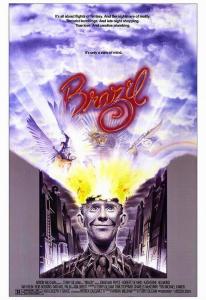
 Brazil: maybe the reason Terry Gilliam titled his dark dystopic tale as he did is so he could use Ary Barroso’s “Aquarela do Brasil” (or, as it’s known internationally, simply “Brazil”) in the soundtrack; that’s a reason as good as any, probably better than most. His delirious film takes place in a retro-futuristic society, where bureaucracy and vigilance are king and general incompetence is queen, and follows a man chasing the (literally) woman of his dreams. The absurdity and the symbology of it all come fast and furiously, making the film very entertaining and intriguing.
Jonathan Pryce plays very nicely the everyman at the center of the tale, an insecure bureaucrat content with his meaningless life. Kim Greist, as his love interest, is both resourceful and appealing. Robert De Niro is charming as the valiant man against the system. The rest of the supporting cast (Ian Holm, Michael Palin, Jim Broadbent) is very entertaining.
Aesthetically, the film is a riot. Production designer Norman Garwood creates a nightmarish look for this world: most environments are busy with “futuristic” wires, pipes, machines, screens, and computers; places of power are, naturally, monumental and clean. They certainly paint a clear picture of the world. Director of Photography Roger Pratt captures it all with odd angles and distorting lenses, enhancing the characteristics of the world even further. Pacing, as given by editor Julian Doyle, is impeccable. Barroso’s track, adapted to be used in many different ways (romantic, triumphalist, ironic), shows its versatility and beauty.
 Fifth about The Seventh