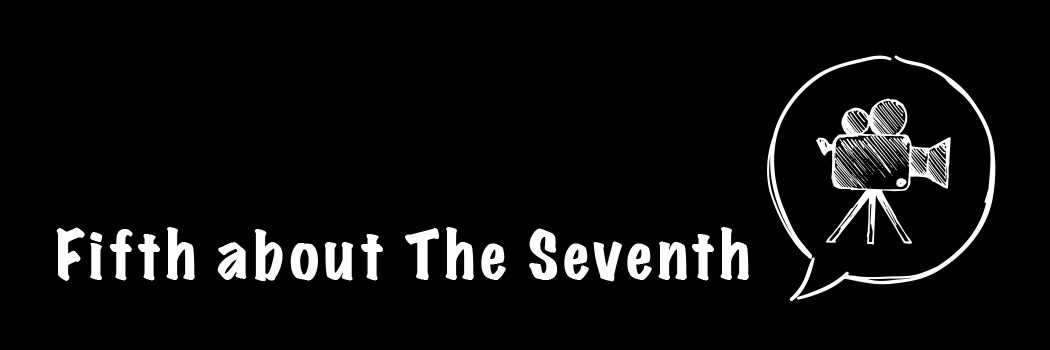
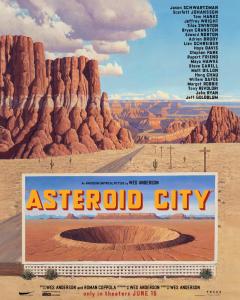
 Asteroid City: a revisit to Wes Anderson’s film, particularly so close to the original viewing, allows for a deeper look and appreciation for the intricacies of the narrative. The film is about a TV show about the production of a fictional stage play, from its inception to the staging. Or is it? Definite answers are boring, but the film is about storytelling and grief, ultimately. It’s also about Anderson’s oeuvre itself: the characters dress peculiarly because, within the film, they are not “real people”, but actors playing characters. Be that as it may, costume designer Milena Canonero’s creations are as great as ever.
The sets are meticulous and detailed because they are not “real places” being lived in, but movie sets built to be shown. It is, then particularly interesting that the real place within the film is in black-and-white and looks stagey, while the detailed, colourful small city is just the figment of a writer’s mind. Either way, both are again lovely creations by production designer Adam Stockhausen.
Yes, Robert Yeoman is the cinematographer, there’s no need to keep repeating how rich and interesting his work is. Yes, Alexandre Desplat composed the playful, filled-with-wonder original score; yes, the use of music beyond that is also spot-on.
The performances are also what one would expect: in a peculiar key (and yes, it’s also justified within the logic of the story) but very efficient. Jason Schwartzman is particularly good and touching as the grieving widow, and the actor who plays him; Jeffrey Wright is a riot as a very odd general; Grace Edwards and Jake Ryan, as two of the “not normal” kids that fall in love, are very good.
This is a very interesting film experience. As an added bonus, a typically weird piece of the film’s marketing.
Read what I wrote before: Asteroid City
 Fifth about The Seventh